
You have found a product. Everything after that is where the money goes.
Most people who start selling on Amazon do not fail because they picked the wrong product. They fail because nobody walked them through the twenty-five decisions that come after it. This is that walkthrough — thirty-four short chapters, in the order the work actually happens.
Buy the paperback on Amazon Read it on Kindle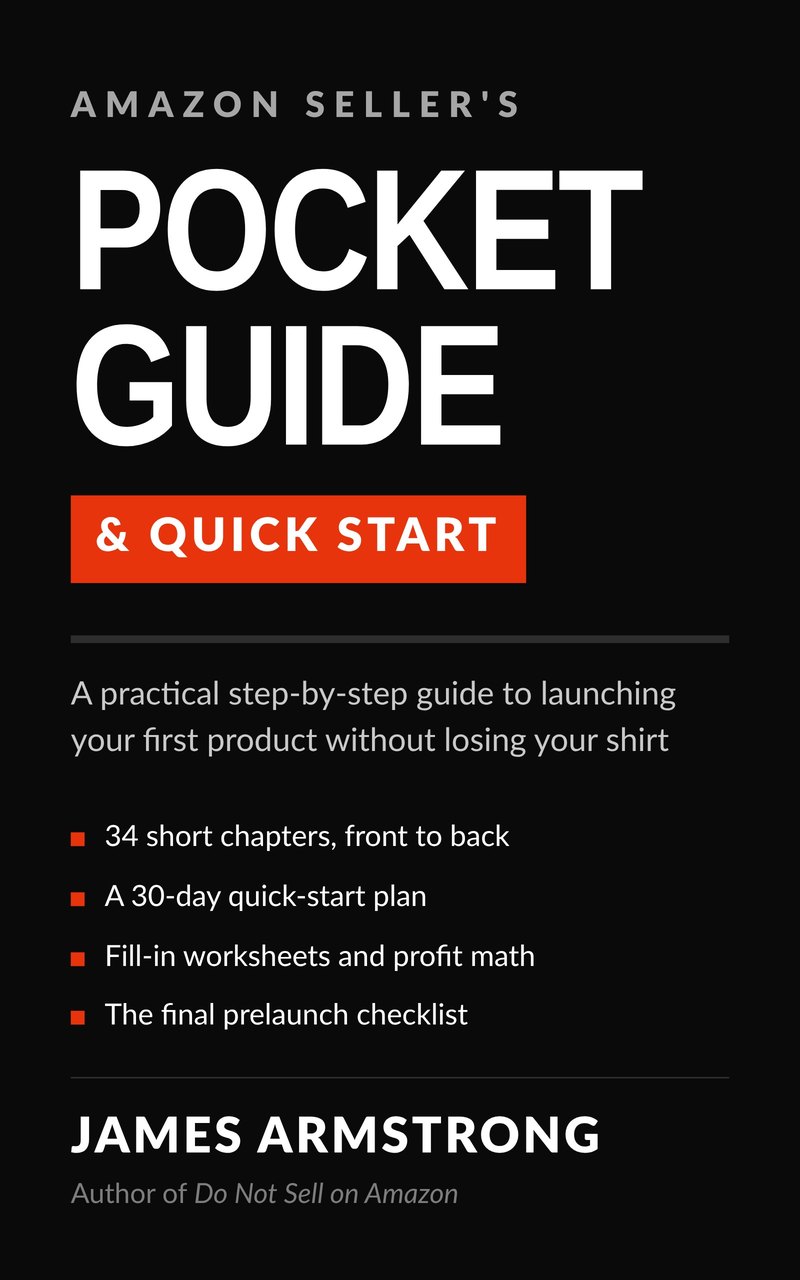
- 34 short chapters
- 30-day quick-start plan
- 39 worksheets & checklists
- Since 1999 selling online
- 1,000+ sellers advised
The procedure, not the pep talk
Written to be used, not admired: plain language, original diagrams instead of stale screenshots, worksheets with blanks to fill in, and no guru talk. Every number shown is illustrative and labeled as such, because Amazon changes its fees and policies without notice — you are told exactly where to confirm your own.
Before you spend money
Whether the product is genuinely profitable, what the fee stack takes out of every sale, and how much inventory to order the first time.
Building the business correctly
Sole proprietor or LLC, Individual or Professional plan, seller verification, and the early holds that catch new accounts by surprise.
Identifying and protecting the product
UPCs, GTINs and GS1 done right the first time, trademarks and Brand Registry, and the intellectual-property traps that end listings overnight.
Preparing and listing
Packaging, FBA versus FBM, how the catalog really works, listing creation, photography, compliance, and what to do when a listing goes suppressed.
Inventory and the launch
FBA prep and shipping plans step by step, the first sales, Vine, coupons, and advertising numbers explained in plain language.
After the sale, plus the tools
Returns, reviews, account health and plans of action — then the 30-day plan, the final prelaunch checklist, a glossary and fill-in worksheets.
Read this if you are
- Holding a product idea and unsure what the next step is
- About to place a first inventory order
- Setting up a seller account and want it done correctly once
- Preparing a first FBA shipment or a first launch
- Already live and getting blindsided by returns, reviews or account health

Who is telling you this
I have been in business for myself since 1991 and selling online since 1999. I did not start with a course — I started with a failure. I had just closed my computer rental business and was selling the leftover inventory on eBay to keep the lights on, buying more at storage and business auctions.
In 2010 I founded Brand Marketing Concepts, LLC and moved to the other side of the table, running Amazon businesses for other people. Over sixteen years I worked with more than a thousand sellers, and more than three hundred were ongoing account-management clients whose businesses I ran day to day.
The first book was the warning I gave people who called me one year too late. This one is the walkthrough I gave the ones who called in time.
Questions people ask
Do I need to read Do Not Sell on Amazon first?
No. They stand alone. That book is the warning — whether to sell on Amazon at all. This one is the procedure — what to do, in order, once you have decided to.
Is this a course or a coaching pitch?
Neither. It is a book. There is no upsell inside it, no webinar, and no promise of results. The worksheets are yours to copy for your own business.
Are the fees and numbers current?
Every figure in the book is labeled as illustrative, because Amazon changes fees and policies without notice. What the book gives you is the arithmetic and the exact place in Seller Central to confirm your own numbers.
Which marketplace does it cover?
The United States marketplace. The sequence of work is similar elsewhere, but the fee schedules, tax and compliance specifics are US.
Is it for private label, wholesale or arbitrage?
The launch sequence is written around bringing your own product to market, which is the hardest path. Wholesale and arbitrage sellers can skip the branding and identifier chapters and use the rest as written.
Is this book affiliated with Amazon?
No. It is not authorized, endorsed or reviewed by Amazon. It is written by an independent consultant who has worked on the seller side since 1999.
Every worksheet, ready to fill in
The book gives you the worksheets to copy. If you would rather type into them and keep a file per product, the companion pack is the whole set as fillable pages, plus a spreadsheet that does the profit math for you.
The Worksheet Pack
All 39 worksheets and checklists from the book as fillable 8.5 × 11 pages — 547 form fields you can type into in any PDF reader — plus an Excel workbook that returns landed cost, break-even price, profit per unit and break-even ACoS from your own supplier numbers.
$19
Get the Worksheet Pack →Try three of them first
Before You Order — the three pages that stop a bad first order: the Product Opportunity Scorecard, the Product Profitability Worksheet and the Supplier Due-Diligence Checklist. Same fillable pages as the full pack, no payment needed.
Free
Download the free set →Start with the other side of the argument
Before the procedure, the reality check. Do Not Sell on Amazon Until You Read This covers the scams, the fee arithmetic, the suspensions and the exits — whether to sell on Amazon at all.
Free references: Amazon seller scams to watch out for · Amazon seller terms glossary
Thirty-four chapters. One order of operations.
The decisions after the product are the ones that cost money. Take them in order, with the traps marked.
Buy the paperback on Amazon Read it on Kindle